| Monthly Climate Dinner -- Past Topics |
 |
|
Around 2010, the Earth's warming as measured by
satellite data seemed to have stopped. Climate
skeptics had a field day talking about "the pause"
in warming. Here is a plot I made from the satellite data
downloaded from the University of Alabama at
Huntsville website: 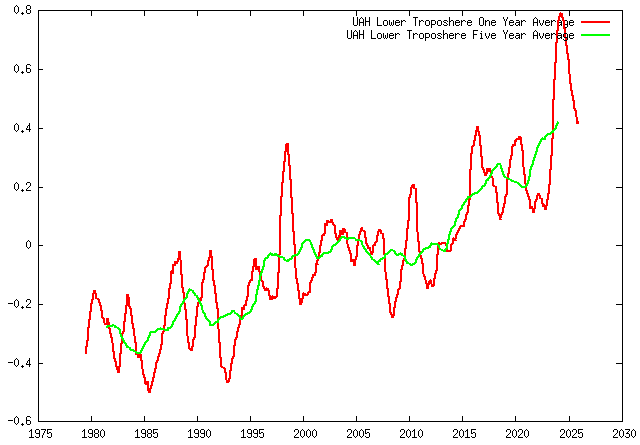 UAH Lower Troposphere Satellite Temperature Data The raw data was monthly, the red line is the monthly data averaged over a year, and the green line is monthly data averaged over 5 years, which is the most interesting as it makes it easier to observe long-term trends, which is what we are interested in. As one can observe, looking at the green line, that warming seems to have stopped from about 1998 to 2014, after which warming returned with a vengeance. For years, climate skeptics kept saying "warming has stopped" because they weren't checking the latest data, and many of them are less than honest. The climate skeptic Roy Spencer is at the
University of Alabama at Huntsville, and he makes
this chart available on his website. 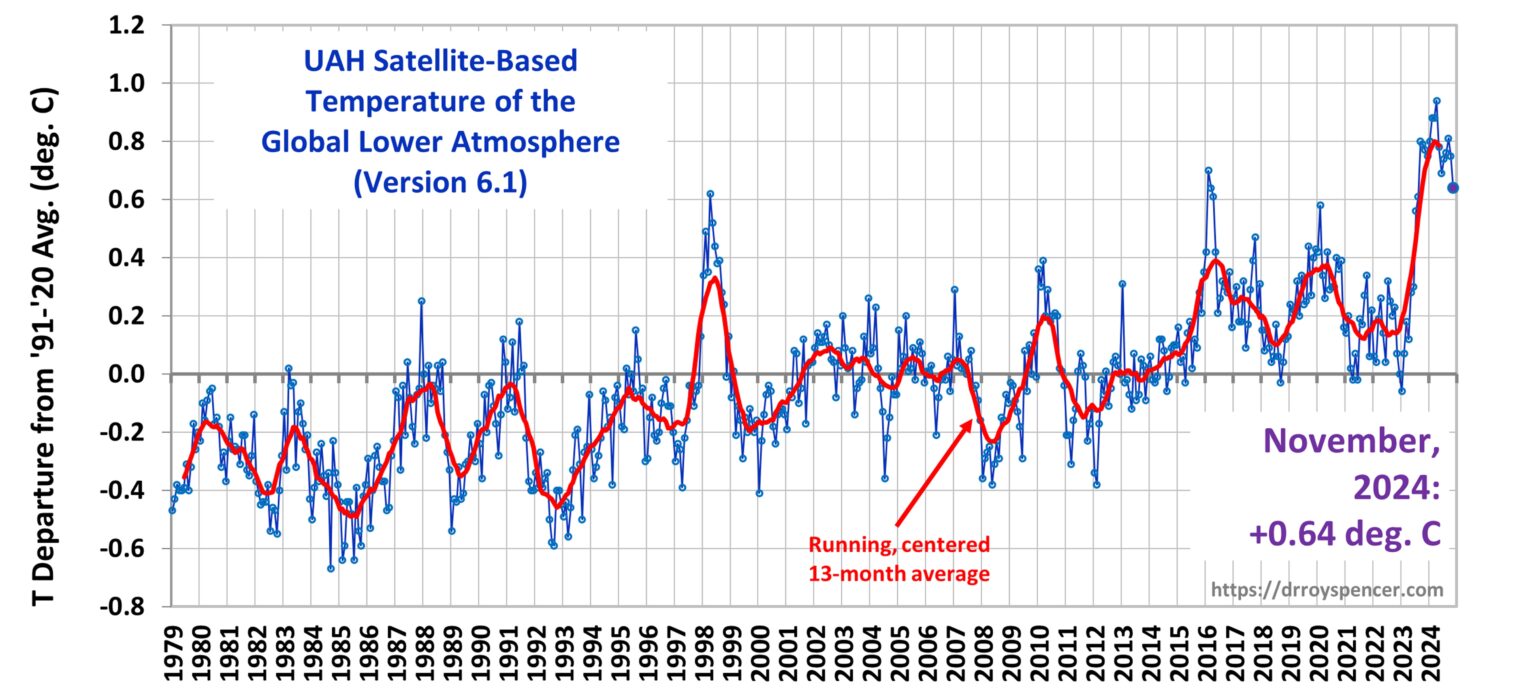 It's the same data, but he does tricks to minimize
the amount of warming that is apparent. To
begin with, he compresses the Y-axis relative to the
X-axis for no appartent reason. He never plots
5-year data. His red line and my red line go
up and down at the same time because they're both
plotting the same thing. He plots all these
blue points that came from heaven-knows-where, it's
probably monthly data which is seasonal,
meaningless, and completely useless except to drown
the signal in noise. To do a better job of drowning out the signal in noise, Spencer would have had to outright fabricate data, which I don't believe he did. The first time I saw Spencer's plot I didn't have
my own plots of the satellite data. A climate
skeptic was showing me Spencer's plot in about 2021
and telling me with a straight face that the plot
showed "no warming". I didn't agree -- I felt it
showed warming, and that was what motivated me to do
my own, more objective, plots, minimizing the noise
and maximizing the signal. Interestingly, "the pause" didn't show up on
surface temperature measurements. NOAA
provides plots: 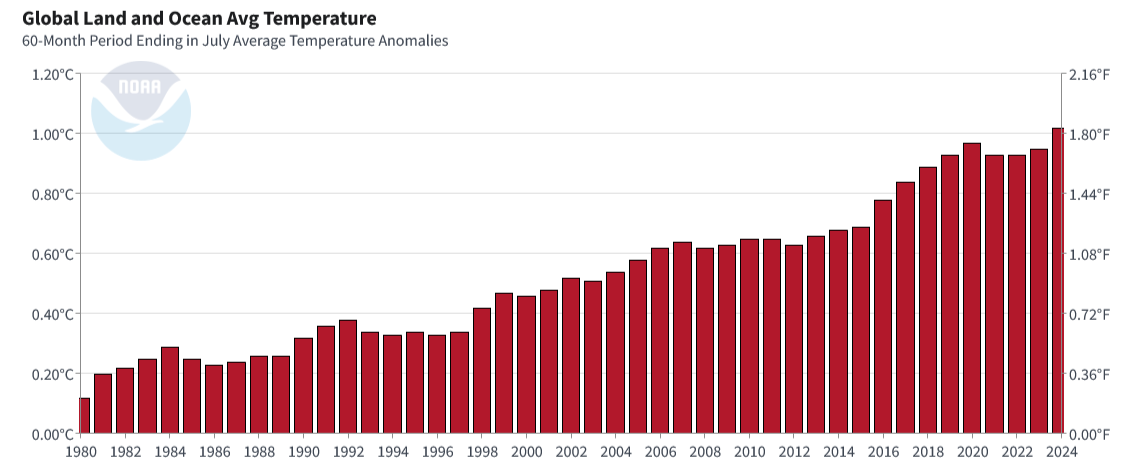 This is plotting a 5 year average of the
data. There's still "the pause", but now it's
only from about 2008 to 2014 rather than 1998 to
2014. Some climate scientists argue that the reason for
"the pause" in satellite temperature data was that
the satellite was decaying in it's orbit, and here
is a plot I made from data that had that decay
adjusted for: 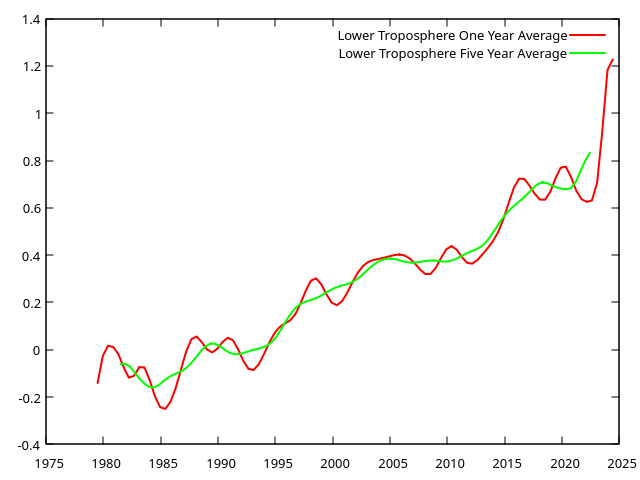 "The pause" is still there, but much less evident. No matter whose plot one uses, whatever "pause"
ever existed ended over a decade ago. |
|
Environmentalism: Competing Visions For the Future
The traditional environmental movement often carried a deep suspicion of technology, industrial development, and economic growth. Many environmentalists opposed nuclear power, large infrastructure projects, suburban expansion, and much of the industrial economy itself. The movement accomplished important goals — cleaner air and water, preservation of wilderness, and reduced pollution — but it also helped create a vast regulatory structure that makes building almost anything in America extraordinarily difficult. The results are visible everywhere. The United States still lacks the extensive networks of bullet trains common across Europe and Asia. Major infrastructure projects routinely spend years or decades trapped in lawsuits, environmental reviews, and permitting battles before construction even begins. This creates a major contradiction for climate policy. Decarbonizing the economy requires building enormous amounts of new infrastructure: transmission lines, renewable energy, nuclear plants, geothermal systems, rail, mining, and energy storage. That would be difficult under any circumstances, but under the current permitting framework it becomes well-nigh impossible. As a result, some climate-focused organizations such as Citizens' Climate Lobby have begun advocating “permitting reform” to streamline some of these barriers so clean-energy infrastructure can actually be built. Environmentalism has also often projected a message of sacrifice: consume less, travel less, own less, and feel guilty about modern prosperity. Combined with an undercurrent of hostility toward many aspects of ordinary American life, this message has not been especially attractive to much of the public. A more successful environmental movement would present a vision of abundance instead — a future powered by cheap, clean energy and advanced technology. There are good reasons for optimism. Wind and solar power have become remarkably cheap, especially solar, whose costs continue to fall rapidly. Their main weakness is intermittency: the sun does not always shine and the wind does not always blow. Batteries remain extremely expensive for storing enough electricity to fully stabilize the entire grid for long periods. But not every industrial activity requires perfectly continuous operation. Some forms of energy-intensive manufacturing could simply run intermittently whenever renewable electricity is abundant and cheap. Hydrogen production, fertilizer manufacturing, aluminum refining, desalination, synthetic fuels, and other bulk industrial processes could ramp production up and down based on the availability of cheap energy. In many cases, stockpiling the manufactured products themselves would be far cheaper than storing vast amounts of electricity in batteries. Other technologies are promising as well. Next-generation nuclear reactors may eventually provide abundant low-carbon electricity with improved safety and potentially lower costs. Geothermal energy today is mostly limited to geologically favorable regions, but advances in deeper drilling technology could eventually make geothermal power available across much larger parts of the world. An optimistic climate politics would emphasize these possibilities: abundant clean energy, advanced industry, modern infrastructure, and rising prosperity. People are far more likely to support a future that promises abundance than one centered on guilt, austerity, and permanent limits. |
|
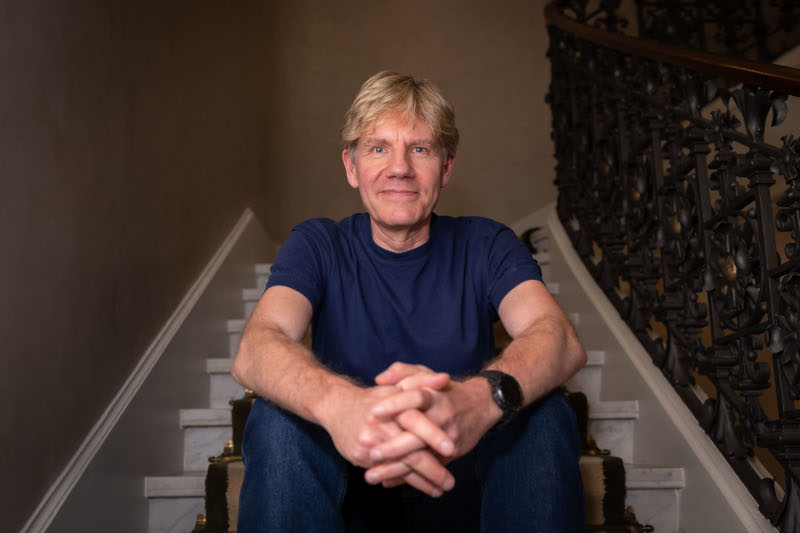
The first thing Bjorn Lomborg will tell you
is that he's not a "climate denier" because he
believes the Reports of the Intergovernmental
Panel on Climate Change (IPCC).
But most of the time that his lips are moving,
he is making a case against aggressive climate
action. |
|
Anticipated Impacts of Climate Change:  These estimates were obtained conversing with ChatGTP, mostly based on its reading the IPCC reports, particularly AR6. Overall Outlook Expected
The probabilities of each RCP path are not precisely known, the percent values given here are speculative and rough. RCP 2.6 is very optimistic and assumes that we will reach net zero by 2050 and remove some CO2 from the atmosphere after that. Note that the poles warm much faster than the planet as a whole. This is problematic because global wind patterns are driven by the temperature gradient as one travels from the equator toward the poles, and prevailing wind and precipitation patterns may change, disrupting agriculture. Once the concentration of CO2 rises above 1000 ppm, people can feel it -- the whole planet starts feeling like a stuffy room and people get uncomfortable. Some people start getting headaches and it can undermine attention-span. Sailors in submarines and astronauts are able to tolerate much higher levels than that, but it's uncomfortable for them. Note that such concentrations are unlikely before 2100, but may occur afterward. Many people believe that climate change poses a risk of causing human extinction this century. According to the IPCC reports, that is extremely unlikely. A heat wave in Europe in 2022 killed 60,000 people. When I lived in Germany as a kid in the 1960'-70's, no one had air conditioning, it just wasn't needed. While the world will get hotter, we expect to get more prosperous and more of the people in hot countries will be able to afford air conditioning. But power grid failures are more likely during the heavy load when everyone turns on air conditioning during a heat wave, so a heat wave combined with a power failure could be catastrophic. For various reasons, heat waves kill more females than males. Keep in mind that the numbers lost from heat waves are pretty small compared to the number who currently freeze to death -- about 4.5 million per year. When I say "global crop failure of 30%" I mean "simultaneous crop failures in multiple regions amounting to a global loss of 30%". Crop failures would be caused by droughts and flooding. Note that these numbers are for a global crop failure, which means crop failures in multiple breadbaskets at once. Crop failures in any one region in isolation would be much more likely. The thing about crop failures, other than people directly starving, is if people are hungry but not quite starving, or being bankrupted by food prices skyrocketing, this could lead to a lot of civil unrest and even warfare, for example when a severe drought caused a 40% crop failure in Russia in 2010 led to food shortages and high food prices, which contributed to the beginning of the Arab Spring, which caused the Syrian civil war and the disintegration of Libya into a failed state, both of which caused huge flows of refugees into Europe and the rise of terrorist groups. The large flow of Islamic refugees into Europe contributed to the rise of far-right political parties all over that continent. And that was just a crop failure in one country, not a global crop failure. Another consideration is that food production will migrate more to northern latitudes. This means that Russia will control a growing share of global food production. The current ruler of Russia is a dictator who frequently murders his political opposition and is so ruthless that he has been frequently threatening nuclear warfare against non-nuclear-armed countries and conducting drone and missile attacks on residential neighborhoods, deliberately killing civilians. It would be unfortunate to be trusting that government with the power to cut off the food supply to much of the world as a political weapon. One meter is roughly 3 feet and four inches. The estimates of sea-level rise are very uncertain. Sea-level rise is mostly caused by three things:
"A" and "B" are fairly straightforward for climate scientists to model and predict, but there are some very large, unstable land-based glaciers in Antarctica whose breakup could be sudden and catastrophic, and it's very hard to predict exactly when they will let go and flow into the ocean. Therefore, the numbers given here are very uncertain. One meter doesn't sound like much sea-level rise, since most people live much more than a meter above sea-level. But it's not like everything one meter about sea-level is safe -- when storms happen, there is often a large low-pressure area at the storm that sucks sea water toward it from all directions, resulting in a temporary sea-level rise. So you might think that you're safe at 2 meters above sea-level, but that's not the case -- during hurricane Sandy in New York City in 2012, the storm raised sea-level by 2.6 meters, which combined with high tide at the time was a 3.5 meter (10' 6") sea-level rise. Many neighborhoods and homes were flooded, an important power station in Manhattan was knocked out, subway tunnels were flooded, destroying electronic equipment in them. The R subway tunnel between Manhattan and Brooklyn was shut down for a year for repairs, and the L subway tunnel was partially shut down for awhile. Note that the probability of a two meter sea-level rise by 2100 is ~1-3%. There is a 90% chance that the AMOC (Atlantic Meridonal Overturning Circulation) will be weakened, and a 1-10% chance that it could break down entirely. This current brings warm water from the Caribbean toward Europe, making Europe much warmer than it would otherwise be. Holland, for example, has a climate similar to New York City, but it is at a latitude similar to north Ontario, Canada, which is so cold that very few people choose to live there. As the AMOC weakens, Europe will get much colder and become a much less pleasant place to live. |
|
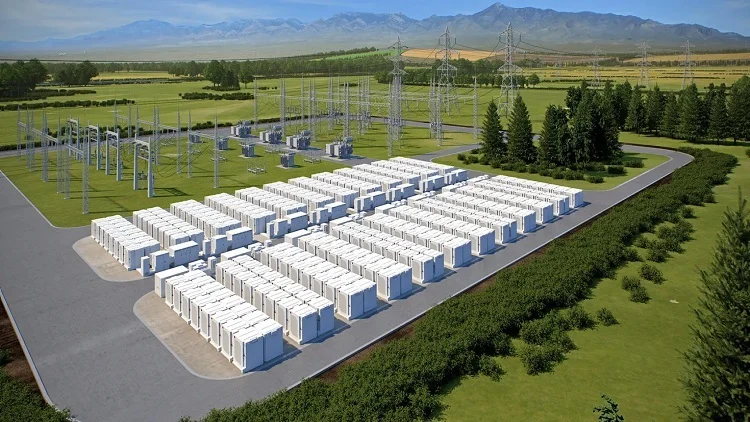
Comparison of Battery Technologies:
|
|
Well, 2025 was a disastrous year for climate progress. Trump has de-funded a lot of climate science, as well as other science in general, and shut down wind projects whenever possible. He has promoted infamous contrarian crackpots to provide leadership on the climate issue. So what should we do, for the time being? We can learn something from what the Heritage Foundation did when Biden was inaugurated in 2021. The wrote down a plan, "Project 2025", of what they would do if they acquired power again. Outreach to conservatives on climate is currently extremely difficult, because political polarization is so extreme that anything either end of the political spectrum wants, the opposite end will oppose, apparently just out of spite. So for this meeting we will discuss climate
strategy, what we will push for once the Democrats
take power, and possibly ways to reach out to
conservatives. One area where progress is possible is
nuclear energy. The
Republicans, including the administration, are
fully supportive of nuclear energy.
The soot pollution from coal
kills more people worldwide every four days
than have been killed by the nuclear industry
since the creation of nuclear power.
Next-gen nuclear plants cannot melt down like
Fukushima did, and it is possible that with more
R&D, next-gen nuclear will be cheaper, per
kWh, than fossil fuls, which is unlikely to happen
for renewals + storage. If a
non-intermittent energy source is discovered that
is cheaper than fossil fuels, that will solve
global warming right there. If you're interested in debating people to try to
change minds, there is a Facebook Group named Climate Change
Debate where people go to discuss
climate. Most of the replies one gets there
are ignorant snark from people who are
poorly-informed and uninterested in becoming
better-informed, but a substantial fraction of
them are interested in good faith, constructive
conversations. One tactic that one can use when debating climate
skeptics is to post links to the SkepticalScience
website, which is a Wiki with rebuttals to every
popular climate skeptic argument, usually with
rebuttals at the "Basic", "Intermediate", and
"Advanced" levels depending upon your appetite for
detail. |
|
Predictions of Impacts of Climate Change: These estimates were obtained conversing with ChatGTP, mostly based on its reading the IPCC reports, particularly AR6.
The probabilities of each RCP path are not precisely known, the percent values given here are speculative. Note that the poles warm much faster than the planet as a whole. This is problematic because global wind patterns are driven by the temperature gradient as one travels from the equator toward the poles, and prevailing wind and precipitation patterns may change, disrupting agriculture. Once the concentration of CO2 rises above 1000 ppm, people can feel it -- the whole planet starts feeling like a stuffy room and people get uncomfortable. Some people start getting headaches and it can undermine attention-span. Sailors in submarines and astronauts are able to tolerate much higher levels than that, but it's uncomfortable for them. Note that such concentrations are unlikely before 2100, but may occur afterward. Many people believe that climate change poses a risk of causing human extinction this century. According to the IPCC reports, that is extremely unlikely. A heat wave in Europe in 2022 killed 60,000 people. When I lived in Germany as a kid in the 1960'-70's, no one had air conditioning, it just wasn't needed. While the world will get hotter, we expect to get more prosperous and more of the people in hot countries will be able to afford air conditioning. But power grid failures are more likely during the heavy load when everyone turns on air conditioning during a heat wave, so a heat wave combined with a power failure could be catastrophic. For various reasons, heat waves kill more females than males. When I say "global crop failure of 30%" I mean "simultaneous crop failures in multiple regions amounting to a global loss of 30%". Crop failures would be caused by droughts and flooding. Note that these numbers are for a global crop failure, which means crop failures in multiple breadbaskets at once. Crop failures in any one region in isolation would be much more likely. The thing about crop failures, other than people directly starving, is if people are hungry but not quite starving, or being bankrupted by food prices skyrocketing, this could lead to a lot of civil unrest and even warfare, for example when a severe drought caused a 40% crop failure in Russia in 2010 led to food shortages and high food prices, which contributed to the beginning of the Arab Spring, which caused the Syrian civil war and the disintegration of Libya into a failed state, both of which caused huge flows of refugees into Europe and the rise of terrorist groups. The large flow of Islamic refugees into Europe contributed to the rise of far-right political parties all over that continent. And that was just a crop failure in one country, not a global crop failure. Another consideration is that food production will migrate more to northern latitudes. This means that Russia will control a growing share of global food production. The current ruler of Russia is a dictator who frequently murders his political opposition and is so ruthless that he has been frequently threatening nuclear warfare against non-nuclear-armed countries and conducting drone and missile attacks on residential neighborhoods, deliberately killing civilians. It would be unfortunate to be trusting that government with the power to cut off the food supply to much of the world as a political weapon. One meter is roughly 3 feet and four inches. The estimates of sea-level rise are very uncertain. Sea-level rise is mostly caused by three things:
"A" and "B" are fairly straightforward for climate scientists to model and predict, but there are some very large, unstable land-based glaciers in Antarctica whose breakup could be sudden and catastrophic, and it's very hard to predict exactly when they will let go and flow into the ocean. Therefore, the numbers given here are very uncertain. One meter doesn't sound like much sea-level rise, since most people live much more than a meter above sea-level. But it's not like everything one meter about sea-level is safe -- when storms happen, there is often a large low-pressure area at the storm that sucks sea water toward it from all directions, resulting in a temporary sea-level rise. So you might think that you're safe at 2 meters above sea-level, but that's not the case -- during hurricane Sandy in New York City in 2012, the storm raised sea-level by 2.6 meters, which combined with high tide at the time was a 3.5 meter (10' 6") sea-level rise. Many neighborhoods and homes were flooded, an important power station in Manhattan was knocked out, subway tunnels were flooded, destroying electronic equipment in them. The R subway tunnel between Manhattan and Brooklyn was shut down for a year for repairs, and the L subway tunnel was partially shut down for awhile. Note that the probability of a two meter sea-level rise by 2100 is ~1-3%. |
|
Past Topic: October 13th, 2025:
Accuracy of Past Predictions: There have been many, many people modeling the climate and making predictions. Climate skeptics love to cherry-pick a bunch of failed predictions and claim that they are representative of the state of climate science, but that's not really honest. This article lists a lot of the predictions by the most famous climate scientists, and particularly those made by the IPCC, and as you can see, they have been reasonably accurate. 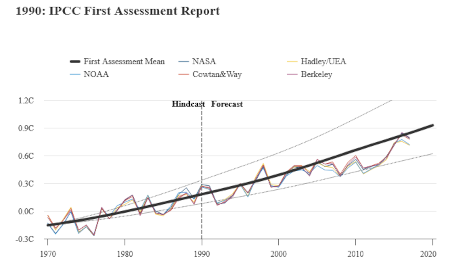 Note there are weather conditions called
1998 was a whopping-hot El Niño year, and then the first decade of this millenium was a whole series of cooler La Niña years, so actual detected warming was a bit less than predicted for that decade. But In the mid-teens, warming really took off again, and warming seems to have accelerated greatly, faster than expected, in 2023 and onward. |
|
Past Topic: September 8th, 2025:
My Climate Science Page:
I've been going into conservative space on Facebook and engaging in debates with them about climate science since about 2016. At least 80% of people who engage in politics do so for entertainment, and they are usually either tribal conservatives or tribal liberals. They root for their preferred ends of the political spectrum as though they are football teams. Such people are not interested in intelligent debate. They see their political opinions as badges of tribal loyalty, and are unwilling to consider any one issue in isolation from its tribal implications. They are interested in finding arguments that support their "team", which they will remember and share, while arguments that cast doubt on their "team" they will dismiss for any lame excuse that comes to mind, ignore, and forget. If I find a conservative who is really interested in an intelligent conversation, I can make progress with them -- certainly not enough to turn them into climate activists, but usually they eventually give up and go away. Over the years of doing these debates I have heard more and more of the arguments they are making, and come up with counterarguments, which I lay out on this page: 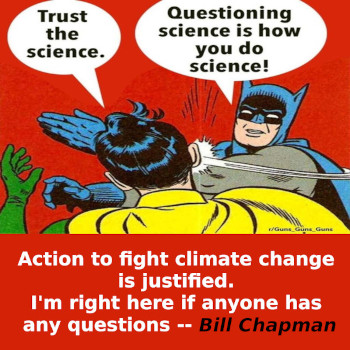 page link Many times I have posted this page in conervative spaces on social media, wanting someone to engage with me. But when I do, I generally hear crickets. That's how social media works -- people are looking for things that support their team, or idiots from the other end of the spectrum saying stupid things to pounce on. The meme about "questioning science" is very common in conservative circles -- there is a lot of "anti-science" sentiment there, they want to disbelieve climate scientists and doctors who advocate vaccines, so they claim those groups are unwilling to answer questions. I'm dying to answer their questions, but maybe a lot of liberals they engage with on these issues are not. I do suspect that this page really is making progress with a lot of people who start reading it and choose not to engage. I encourage you to share it on social media. |
|
Past Topic: August 12th, 2025:
Two Topics: What Are Good Sources on Climate
Science?
What Are Typical Strategies of Climate Skeptics? |
|
What Are Good Sources on Climate Science?
|
|
What Are Typical Strategies of Climate Skeptics?
This is one of the most frequent tactics, and many climate activists play into this trap. Some climate activists will cite short-term weather events, or individual storms, or short-term temperature data, or local temperature records, which are just mostly noisy and meaningless.
It is the nature of media and social media nowadays
that nearly all the attention goes to the most
extreme, shrill, and unreasonable people while the
more responsible and well-informed moderates and
centrists pretty much don't get noticed at
all.
|
|
Past Topic: July 8th, 2025:
Steve Koonin: Decarbonization is not worth the
effort.
Steven Koonin was an assistant professor of physics at Caltech, now an engineering professor at NYU, and was chief scientist at BP from 2004-2009 and Under Secretary of Science at the Department of Energy under Obama. He's been travelling the country advocating against decarbonization. He wrote a book "Unsettled" (which I have not read) where he makes various arguments against decarbonization. He made this 43-minute video: In the video, he makes the following claims:
Koonin's argument that we should ignore the climate modeling predictions of warming and impacts based on tremendous effort by experts and computer models while trusting his guesswork based on gut instinct alone is an awful stretch. He is arguing that we should pretty much forget about global warming, not worry about it, and emit as much greenhouse gases as we want. To make that argument, he has to argue that we somehow know with high confidence that no great harm will come of that, and it's going to take more than gut instinct to make that argument with any credibility. One has to keep in mind that he has no lack of speaking engagements. Conservatives love hearing what he has to say. |
|
Past Topic: June 10th, 2025:
Politics as a "Team Sport" and Trump
80-90% of people who discuss public policy do it as a "team sport" -- they say:
Typically, such people can't really justify their opinions with facts or logic, and they aren't persuaded by facts or logic, because facts and logic aren't how they got where they are. Information that supports the viewpoint of their tribe they will focus on and remember, while information that rebuts it they will dismiss and forget. I don't believe Trump ever read anything about climate change, or watched any lectures on it. I have the impression he doesn't read much, just gets his information through watching conservative TV news and paying attention to social media. So he thinks the desire for climate action is a "liberal idea" and that's all he needs to know -- he's slashed funding for climate research and is having government websites purged of the word "climate". On nuclear energy, most moderate Democrats have come around to seeing it as probably necessary to solve climate change, but many far-left progressives and environmentalists are vehemently opposed, unwilling to listen to reason, and very vocal. This is very fortunate, because it leaves conservatives thinking that "the left hates nuclear". Which means that conservatives are for it. So Trump has signed several executive orders expediting nuclear development. These include streamling regulation and reconsidering the highly pessimistic LNT model of radiation harm to people. This is really good news, because one of the major impediments to nuclear development has been that the industry was deliberately and maliciously strangled with onerous over-regulation enacted by anti-nuclear activists whose motivation was not to make nuclear energy safe, but rather to make it so expensive that the whole industry would eventually be driven out of business. And they nearly succeeded.
|
|
Past Topic: May 13th, 2025
Ironically, the parts of the planet most affected by global warming are also the coldest -- the poles, which are warming 2.5 times faster than the planet as a whole. They've been observed from space since 1979, allowing us to observe the steady retreat of Arctic sea ice. It turns out that global wind and precipitation patterns are driven by the temperature difference between the equator and the poles, and as that difference decreases, those patterns will change, disrupting agriculture. Some are advocating geoengineering, where human interventions try to cool the planet. The most popular proposal would be to inject sulfate particles into the atomosphere to cool the planet, which could be done extremely cheaply, only cost a few billion dollars per year. But it could have drastic unforseen consequences, and everyone agrees that it is a poor substitute for reductions in greenhouse gas emissions. Even if geoengineering cools the planet, higher CO2 levels would still be very problematic. CO2 is about 420 ppm now, when it hits about 800 ppm, everywhere on the planet, outside, will begin to feel like a stuffy room, affecting human comfort. And higher CO2 levels will change the pH of the oceans, fundamentally changing the chemisty of all the life in them. |
|
Past Topic: April 8th, 2025
The founder of this dinner was featured on the podcast of RepublicEn., a nationwide conservative environmental group formed by former South Carolina Representative Bob Ingliss, who saw the light on climate change and travels the country preaching climate change to conservatives. The first 5 minutes is the announcer introducing me, then 15 minutes of she and I talking, and then 7 minutes of other people winding up. Links to the 27 minute podcast from April 1, 2025: |
| Organizer:
Bill Chapman Cell: 212-810-0470 Email |