|
3 Topics Over Dinner is a dinner discussion group that meets on weekends. Links to articles or videos on the internet about 3 Topics, usually unrelated to one another, are posted on the event listing. Attendees read the articles (and other sources if they so wish) or watch the videos to be discussed over dinner. The idea is to be similar to a book club, only with far less reading. The idea is that this required reading / video viewing will be less than 3 hours. We go to a different nationality restaurant every month, and always restaurants that will do separate checks for a large group, so everyone can pay with their own credit card and we don't have to figure out how to split the check. The restaurants are chosen to be quiet and nice, but not extremely exorbitant. A link to the menu of the restaurant, with prices listed, will always be provided on the announcement. The restaurants chosen will always be in Manhattan, 77th St or further south. RSVP's will be limited to have about 8 people at dinner, small enough that everyone can hear one another and we can conduct a single conversation. The group has been going roughly once a month since 2008. It was formed on meetup.com and has shifted to Eventbrite. A $5.00 deposit is required to RSVP. This deposit is refunded in cash ten minutes after the event starts. No-shows and latecomers forfeit their deposit. Monthly Climate Science and Energy Engineering Dinner "When people actually meet and get to know each other ... what Lincoln called those ‘better angels’ come out. People start recognizing themselves in each other and they start trusting each other, and that’s not just the basis for democracy, but that’s the basis for our long-term salvation." -- Barack Obama |
Sunday, August 17th Topics: |
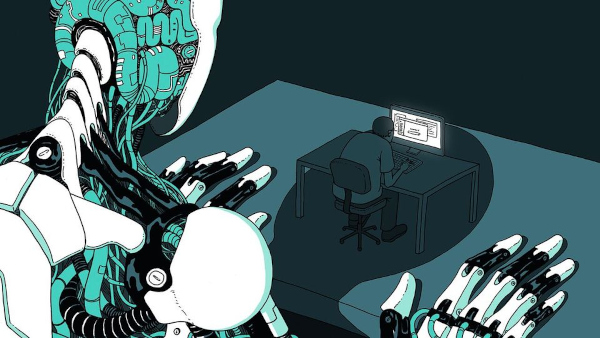
Topic 1: Some Dangers of Artificial Inteligence![]() Article: click here (paywalled - pirate version here. Many experts in the field of artificial intelligence believe that it has over a 10% chance of leading to the extinction of the human race. At the same time, nations fear being at a profound disadvantage if someone else achieves superintelligence first, so everybody rushes forward recklessly. Before social media had fully developed, optimists foresaw it leading to greater wisdom by connecting people. But it has fallen far short of this goal, due to a few problems:
At the same time our media landscape, with an explosion of print publications, news shows, podcasts, blogs, and YouTube influencers also allows relentless indulgence of confirmation bias as people choose to listen to those sources they already agree with. The Overton Window has been stretched to extremes in every direction to the point where it no longer really exists. We recently had Tucker Carlson, a very popular, respected journalist, warmly host someone who claimed that, in WWII, Churchill was the bad guy and Hitler was the good guy, and even after that, Carlson still has a large following. I fear that Artificial Intelligence that is eager to please us will just help us find ways to believe whatever we want to, further exacerbating our potentially fatal epidemic of confirmation bias. A fellow had some crackpot physics theories that faster-than-light travel was achievable. He discussed them with ChatGPT, which told him his theories were sound, while he was in fact experiencing a mental health emergency. In fact, he even asked ChatGPT if he was mentally healthy and the program told him he was fine. The Foundation for Individual Rights and Expression (FIRE) is funding a project to create a truth-seeking AI that will challenge us rather than indulging our confirmation bias. Here are some perspectives on AI from across the political spectrum Link to above video |
|
|
Topic 2: Tradition is Smarter Than You Are
Article: click here
|
|
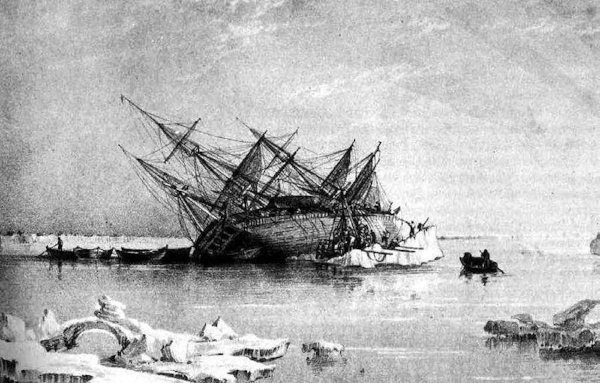
In 1845, the British Royal Navy sent two ships, the HMS Terror and the HMS Erebus, on a voyage to discover a northwest passage from the Atlantic to the Pacific going north over Canada. Both ships had highly reinforced steel hulls that could withstand the ice and enough food to last a few years. They expected to be frozen in for a winter or two along the way. Most of the officers would have been reasonably well-educated, and there were probably libraries on the ships since they expected to spend so much time stationary. They had guns and longboats. So these ships would have had the full knowledge of Western Civilization as of 1845 available to them, and many advanced tools. They got frozen in for two winters in a row, and their canned food turned out to be contaminated with lead, slowly poisoning them. At one point a group of the sailors set out on foot over the frozen wasteland in desperation. They came across a couple of Inuit men with sleds and dogs. The Inuit quickly understood the British were starving and shared some seal meat with them, but abandoned them, having families of their own to feed. Generations later, the story of the encounter was passed from the Inuit people to a white Artic explorer. 170 years later, the bodies of the British were found, they had all starved, and some of the skeletons showed evidence of cannabalism. So these British sailors, with all their education, knowledge of Western Civilization, and sophisticated equipment, couldn't do what these illiterate Inuit without metal tools could do -- figure out how to hunt seals and whales and live off the land. It was Robinson Crusoe in reverse. What the Inuit had that the British didn't was tradition -- a culture that had been worked out over thousands of years of trial and error, gradually evolving into highly effective survival tactics. So much of our society today is so reckless -- casting traditions aside at the drop of a hat, and so frequently performing experiments whose irreversible consequences can't be foreseen. But do we really have any idea what on Earth we're doing? |
|
|
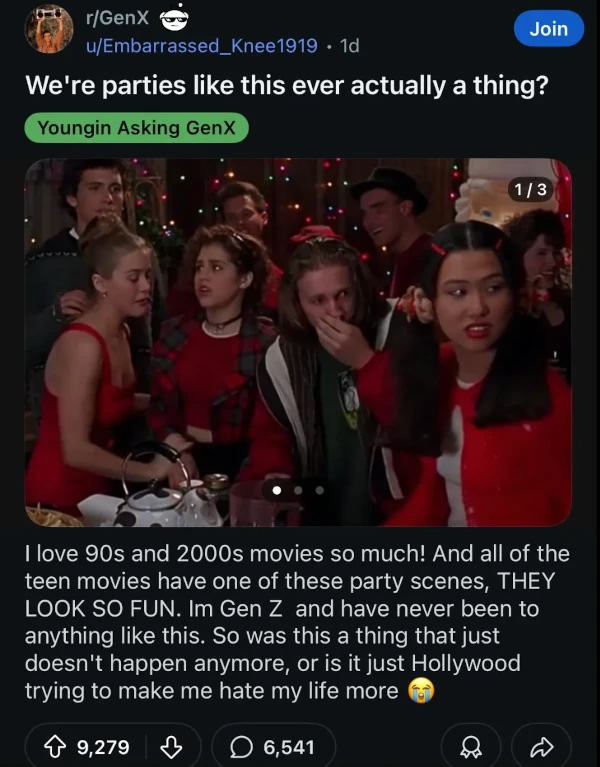
Topic 3: America is in a Party Deficit![]() Article: click here The average American is going to, or hosting, only one party every 25 weekends. I was discussing parties with a fellow at a high school alumni event, and he said "I wouldn't throw a party because I'd be afraid that no one would come.". Perhaps lots of people would like to throw parties, but not only are they not signed up for the hassle, but they're also afraid of being humiliated by a poor turnout? USA Today reports on a loneliness epidemic. In my own life, I discovered meetup.com when I moved to NYC in 2005 and it supplied large numbers of friends to my life. That website has deteriorated over the years as the company has changed hands a few times. |